
Noctuidae
Scientific Name:
Scientific Name:
Crops:
Crops:
- Tomato


Biology
Control Method
Biology
-
Definition
The moth is the generic name of a butterfly (Lepidoptera), of the family Noctuidae, which has about 25000 species in the world. The caterpillar, the larva of the moth, is an important pest of a very large number of annual and perennial plants.The moth is a moth, with a stocky, dull colour, grey-brown body. Its wings form a roof at rest, and have a wingspan of 40 to 50 millimeters. There are sedentary species, which spend the winter in the form of eggs, caterpillars or chrysalises, and migratory species.
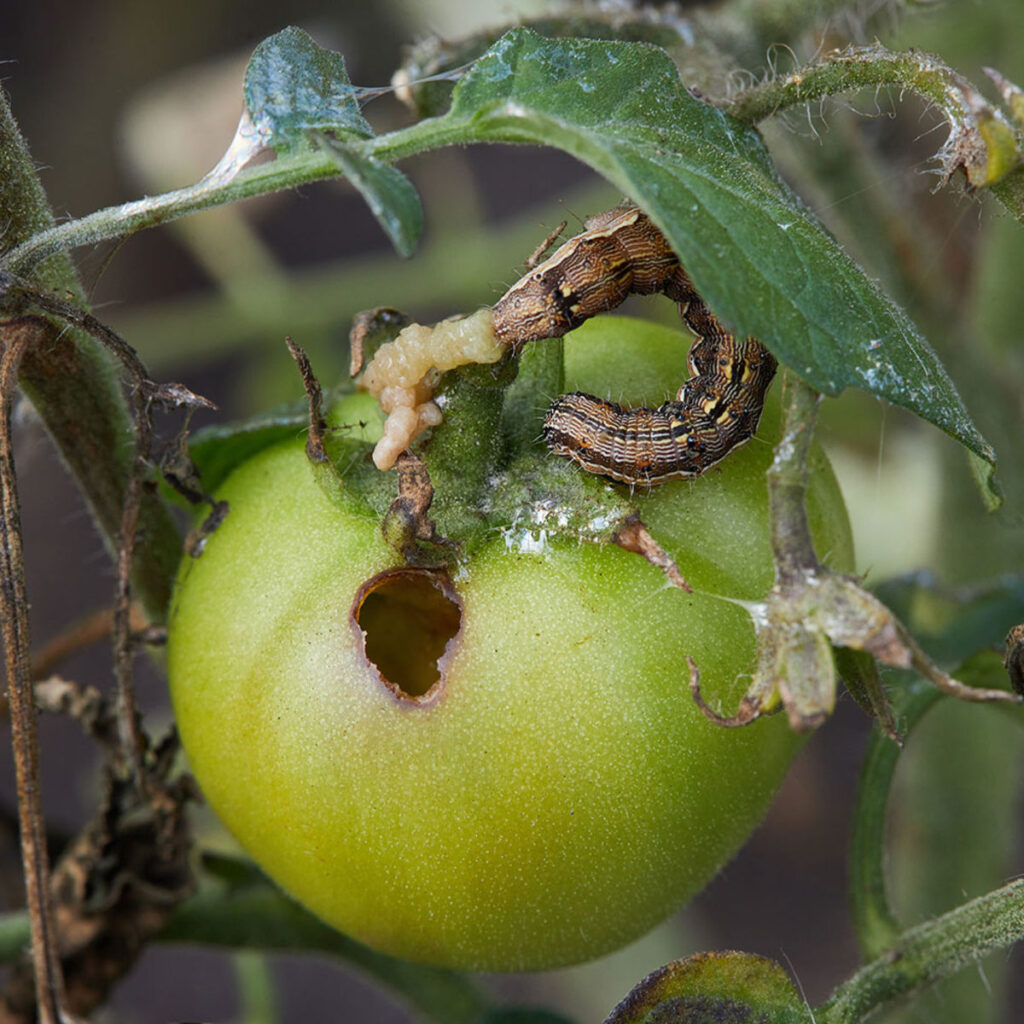
The caterpillar is generally plump, hairless or sparsely hairy, and 35 to 50 millimetres long. It is very voracious. The color varies by species, but most commonly, the caterpillar is green or gray, with black spots on each segment. If touched, it immediately curls into a spiral, characteristically
Development Lifecycle
Butterfly flights begin in the spring and continue until the fall.Females lay up to 1500 eggs each either on the leaves or at the foot of the plants. The egg incubates for about two weeks.
A few days after laying, the eggs hatch; The larvae feed on plants and moult several times before reaching the size of about 5 centimetres. Then they pupate into a chrysalis, before the transformation into a very different adult insect, this is the complete metamorphosis.
If conditions are favourable, 2 to 3 generations can appear per year.
Symptoms
- Wilting and dieback of plants due to larval attack on roots and crown.
- The larva cuts the crown, digs galleries on the roots and consumes the leaves (bites).
- Cessation of development and fall of the fruits following the attack of reproductive organs.
- During grow-out, the larva drills a gallery by consuming pulp, we can observe the terminal part of its body which remains outside the gallery.
Contributing factors
-
Temperatures.
-
Presence of weeds on the plot.
Control Method
Recommended Prophylactic and Cultural Method
- Do not import plants from infected premises.
- Apply crop rotation.
- Avoid wet soils.
- Install insect-proof nets at the openings of the greenhouses.
- Install an entrance airlock for greenhouses to delay intrusion.
- In case of a weak attack, locate the larvae and destroy them.
- Biological control possible with auxiliaries.
- Use of light traps.
Chemical method
- Favor preventive treatment.
- To prevent habituation or resistance, favour applications based on products belonging to different chemical families and different modes of action.


