
Cassida vittata
Scientific Name:
Scientific Name:
Crops:
Crops:
Sugar beet

Biology
Control Method
Biology
Definition
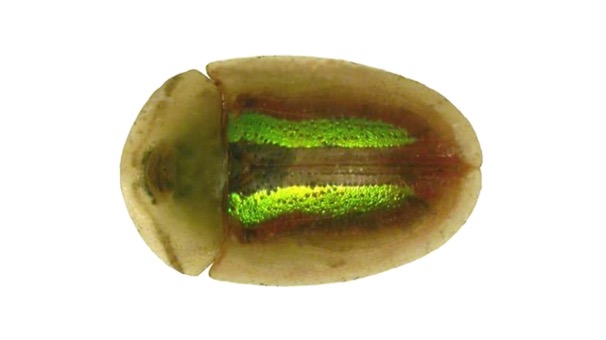
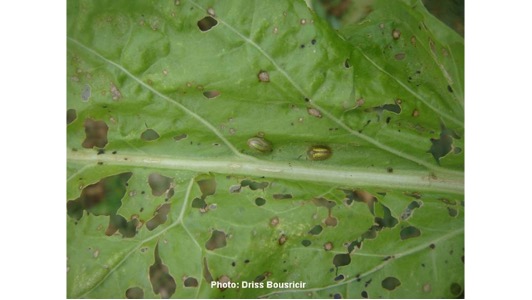
Cassida vittata is a phytophagous beetle considered to be the main pest of sugar beet in Morocco. This insect attacks the foliage, causing significant damage that can affect growth, photosynthesis and consequently root yield and sugar richness. Its presence is now reported in all the country’s beet growing areas .
Development Lifecycle
-
-
Overwintering : Adults take refuge in the soil or crop residues during cold periods.
-
Spring : emergence of the adults with the resumption of beet growth.
-
Egg-laying : females lay eggs on the underside of leaves.
-
Larvae : develop by feeding on the leaf blade.
-
Adults : also consume foliage; Several generations can follow one another during the season.
-
Symptoms
-
Perforations characteristic of the leaf blade: rounded holes or scratched areas (“windowed” appearance).
-
Leaves discoloured and weakened.
-
Reduced photosynthesis, slowed growth.
-
Reduced root yield and sugar richness.
-
In the event of a strong attack: severe leaf damage requiring reseeding.
Control Method
Preventive control
- Crop rotation with non-host species.
- Destruction of crop residues after harvest.
- Sowing at optimal dates to avoid coincidence with population peaks.
- Regular monitoring as soon as the beets emerge.
Chemical control
- Localised insecticide treatments if the intervention threshold is exceeded.
- Targeted application on young larval stages for greater effectiveness.
Ipm
- Combination of preventive, chemical and agronomic measures.
- Regional coordination for clustered and effective interventions.


