
Tetranychus urticae
Scientific Name:
Scientific Name:
Crops:
Crops:
Strawberry
Biology
Control Method
Biology
-
-
Definition
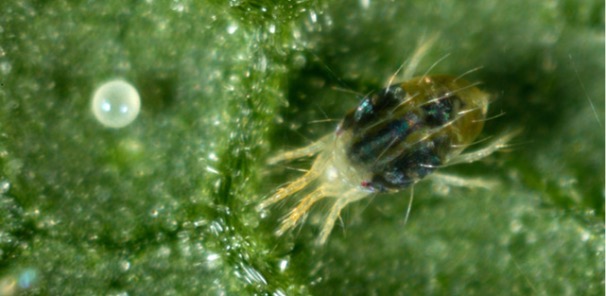
The yellow mite is a widespread and polyphagous phytophagous mite , which feeds by piercing the cells of the foliage with its stylets to suck the contents. This causes serious physiological disorders, such as yellowing and then falling leaves, greatly altering plant growth and fruit development.
Development Lifecycle
-
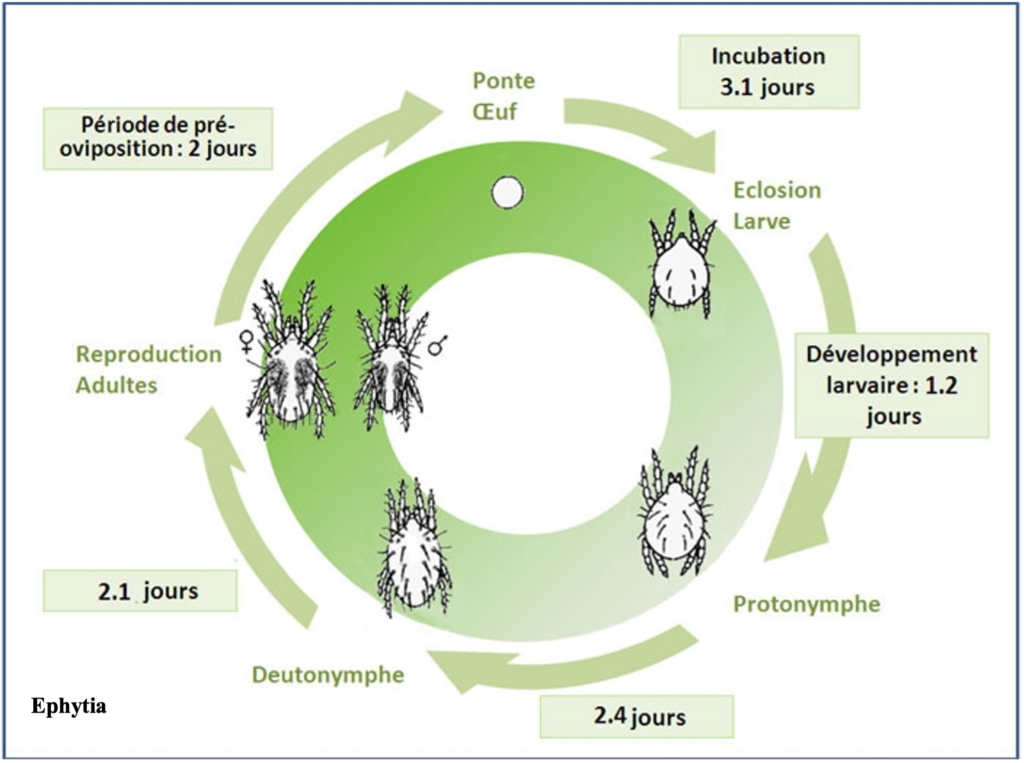
Egg-laying : the female lays her eggs on the underside of the leaves, often near the veins.
-
Hatching : eggs hatch in 2 to 3 days (optimal conditions).
-
Development : succession of larval and pupal stages before the adult.
-
Cycle time : 5–7 days per generation in hot conditions (25–30°C).
-
Multiplication : very fast — several tens of generations per year.
Symptoms
-
-
-
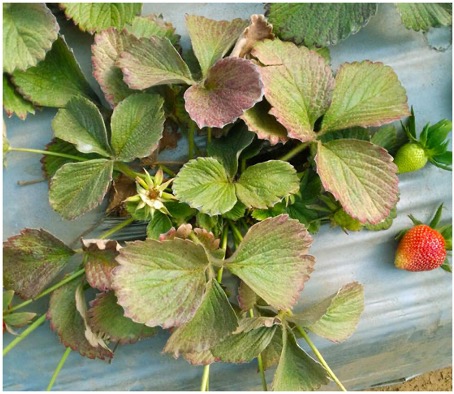
Progressive yellowing of the leaves, with a mottled appearance.
-
Premature fall of the foliage.
-
Slowed fruit development , drop in production.
-
Thin webs visible between leaves, especially in advanced infestation.
-
In severe cases: severe weakening or drying of the plants.
-
-
Contributing factors
-
-
-
High temperatures and low humidity (hot and dry climate).
-
Cultivation in a greenhouse without sufficient ventilation.
-
Lack of natural predation (absence of auxiliaries).
-
Rapid resistance to miticides if poorly managed.
-
-
-
-
Control Method
-
-
Preventive control
-
Careful monitoring of the underside of the leaves, especially in summer.
-
Maintaining good ambient humidity in greenhouses.
-
Avoid non-selective treatments that are harmful to beneficial insects.
Biological control
-
Introduction of predatory mites :
-
Phytoseiulus persimilis
-
Amblyseius californicus
-
-
Protection of natural enemies present in orchards or crops under cover.
Chemical control
-
Targeted use of specific miticides with rotation of active substances.
-
Early interventions at the onset to limit the spread.
-
-

