
Powdery mildew
Scientific Name:
Scientific Name:
Crops:
Crops:
- Tomato

Biology
Control Method
Biology
Definition
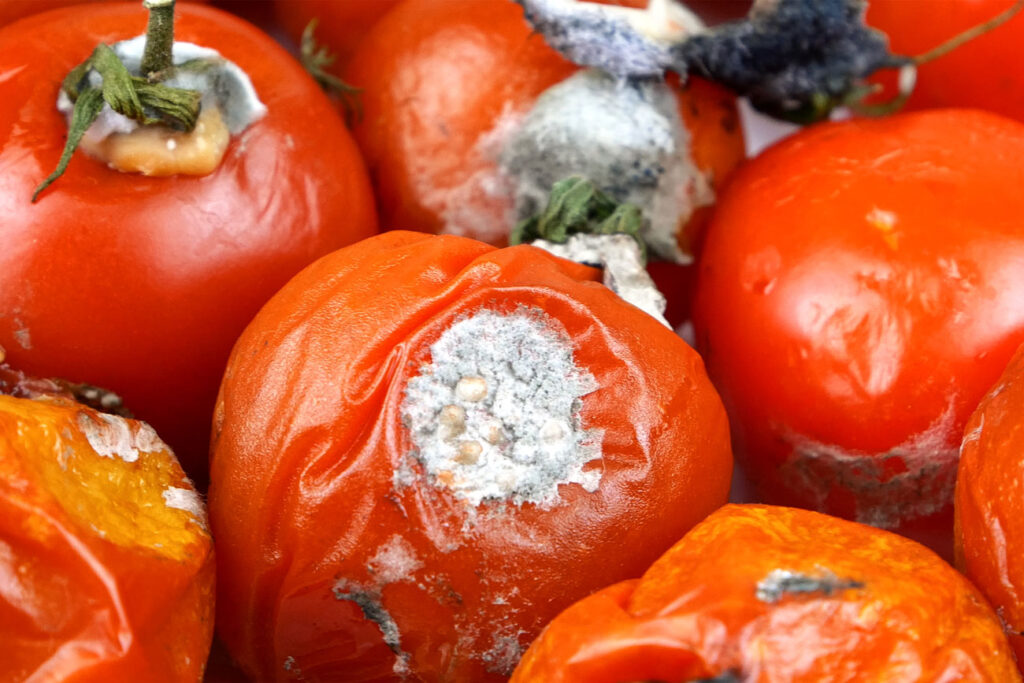
Called powdery mildew disease, powdery mildew is a fungal disease caused by different species of fungi responsible for dreadful losses of up to 50% of marketable production.
Development Lifecycle
Belonging to the Ascomycete family, the fungi responsible for powdery mildew produce a white, filamentous, septate mycelium, which develops mainly on the tops of the leaves. These obligate parasites feed in the cells, using small suckers. They form two types of spores: conidia (asexual) and ascospores (sexual). The latter are usually grouped in groups of eight in an ascus, a small sac in which meiosis occurs.
They overwinter on buds, twigs and fallen leaves in the form of mycelium, conidia or ascospores, depending on the species and climate.
In the spring, the overwintering mycelium and spores cause the primary infection by dispersing under the action of wind and rain.
During the growing season, the mycelium develops and produces an abundance of asexual spores (conidia). These disperse and can germinate quickly, even on fabrics that are not wet. Once anchored, the mycelium can develop in a wide variety of climates.
Towards the end of summer, the fungi form small black fruiting bodies containing resistant sexual spores (ascospores), which ensure their survival during unfavourable periods (winter, drought) and maintain the genetic diversity of the species.
Symptoms
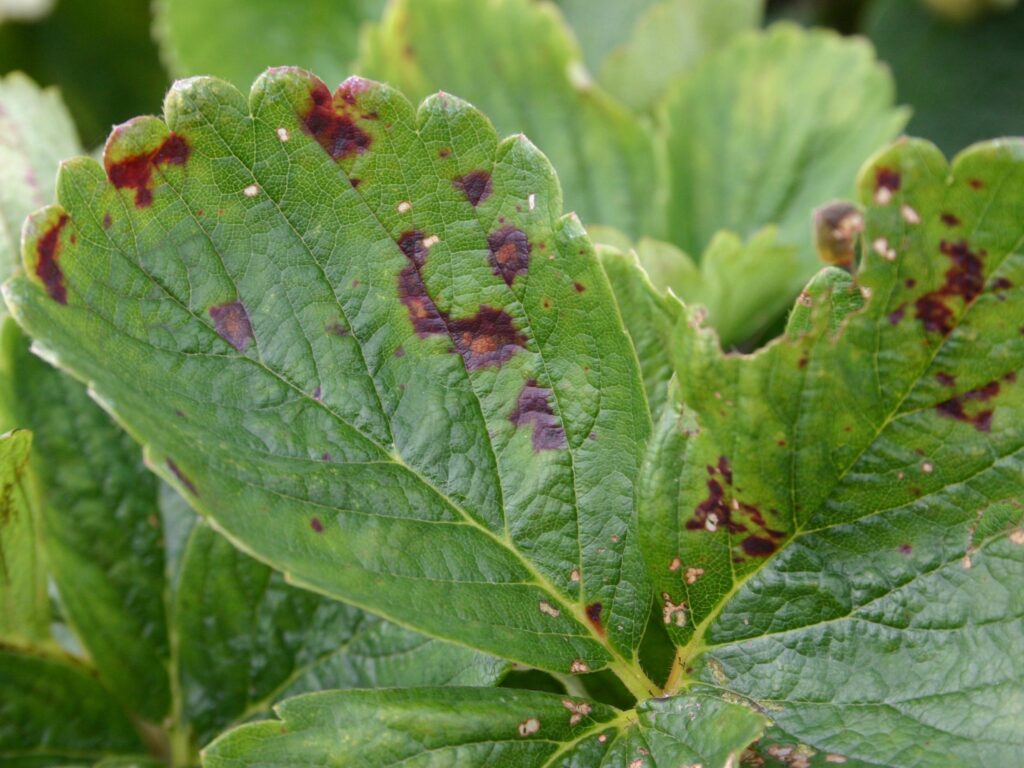
- Yellowed spots on the upper surface of leaves
- Appearance of a powdery white felting on the underside of the leaves, corresponding to the spots.
- The affected parts turn brown, dry out and tear easily.
- Attacked leaves tend to lose their consistency and the blade may fold upwards.
Contributing factors
- Relative humidity of 70% to 80%
- Temperatures below 10°C
- Significant temperature differences between night and day
Control Method
Recommended Prophylactic and Cultural Method
- Space the plants sufficiently apart when transplanting.
- Clean up the area around the plantations.
- In hot weather, be careful not to water the foliage.
- Clean tools and remove affected areas promptly to limit the spread of disease.
- Dispose of plant debris by burial, incineration, etc.
Chemical method
- Prioritise preventive treatment from the beginning of the vegetative growth phase.
- Treat as soon as the first symptoms appear. Beyond 10 to 15% of the surface area affected, the treatment becomes ineffective.
- Repeated treatments every week or fortnight, depending on the aggressiveness of the disease, with specific anti-powdery mildew, from the appearance of the first symptoms until the low temperatures limit new infections.
- To prevent addiction or resistance, use applications based on products belonging to different chemical families and modes of action.


