
Pseudomonas syringae
Scientific Name:
Scientific Name:
Crops:
Crops:
Cherry trees
Plum
Peach
Apricot

Biology
Control Method
Biology
-
Definition
Bacterial canker is a serious bacterial disease that mainly affects stone fruit trees. It causes cankers on branches, rapid dieback of shoots, necrosis of flower buds, and can lead to the death of young plants. This disease is responsible for considerable economic losses in orchards.
Development Lifecycle
-
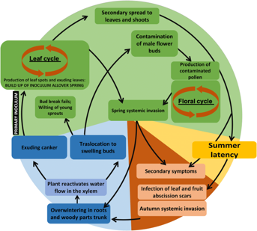
Winter survival : The bacteria overwinters in buds, bark, cankers or pruning wounds.
-
Spread : with rain, contaminated tools or wind, bacteria colonize wounds, lenticels, or flowers.
-
Penetration : The bacteria enters through mechanical wounds, frost cracks, or growth points.
-
Propagation : The disease progresses rapidly in moist tissues in the spring.
-
Visible symptoms : cankers, dieback, floral necrosis.
Symptoms
-
Moist, dark cankers on the trunk, twigs or branches.
-
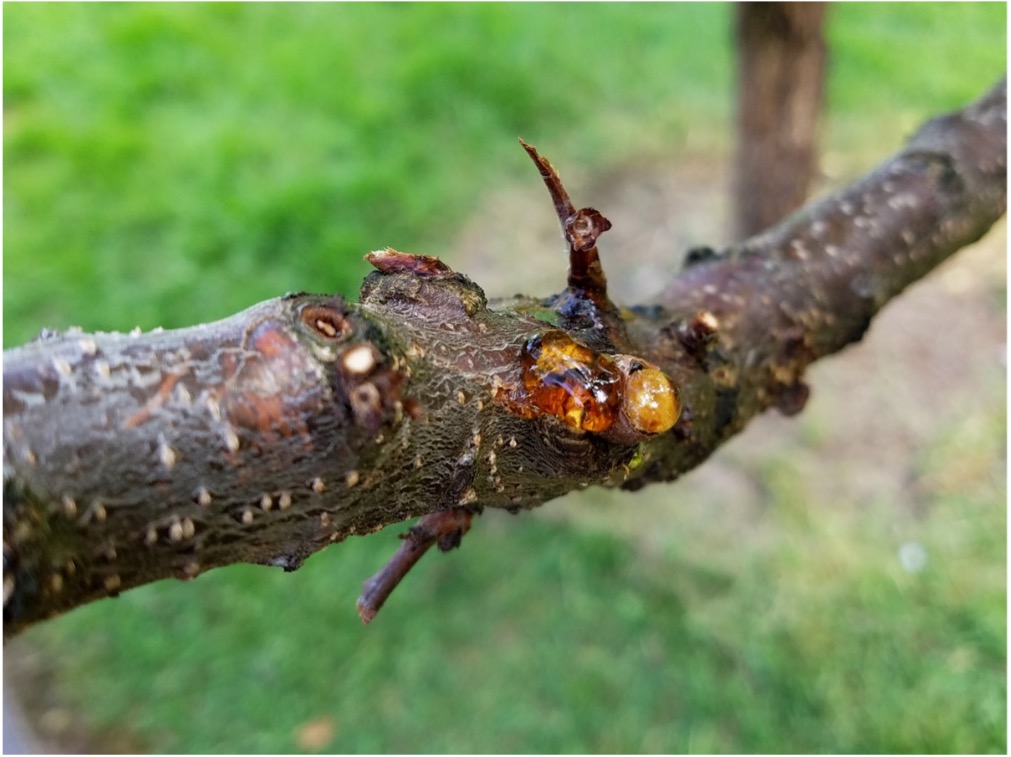
Discharge of bacterial gum (gumosis).
-
Rapid dieback of terminal shoots.
-
Blackening and wilting of flowers (floral bouquets).
-
Stunted growth of young plants.
-
In severe cases: death of the plant.
Contributing factors
-
-
Injuries caused by pruning, frost, or hail.
-
Wet and cool conditions (spring or autumn rains).
-
Use of non-sanitized tools.
-
Weakened or poorly maintained trees.
-
Dense plantings or poorly ventilated areas.
-
-
Control Method
Preventive control
- Disinfect pruning tools between each tree.
- Carry out pruning in dry periods (preferably summer).
- Avoid mechanical injury or water stress.
- Remove and burn the affected parts as soon as symptoms appear.
- Choose more tolerant cultivars if available.
Chemical control
- Application of copper-based products (Bordeaux mixture) as preventive treatments, especially before and after pruning.
- No direct curative treatment exists against the bacteria.
Cultural control
- Improve air circulation in the orchard.
- Avoid excess nitrogen, which makes tissues more sensitive.


