
Monilinia spp
Scientific Name:
Scientific Name:
Crops:
Crops:
Tomato
Pepper
Strawberry
Palm tree
Vine


Biology
Control Method
Biology
-
Definition
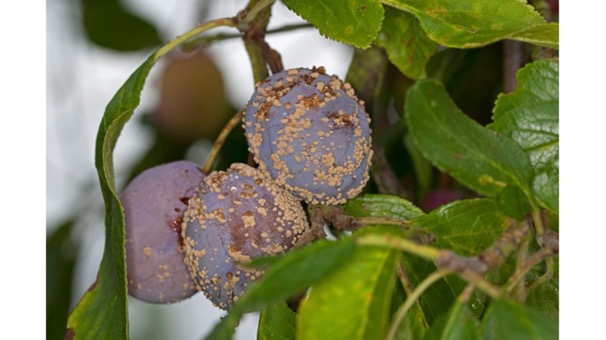
Moniliosis is a fungal disease that affects stone and pome fruit trees. It causes the flowers to dry out, the necrosis of young twigs and the rot of the fruit at the end of ripening. This disease is often favoured by humidity, wounds (pruning, hail) and the presence of mummified fruits or cankers carrying the fungus.
Development Lifecycle
-
Overwintering : The fungus survives the winter in mummified fruit, infected twigs, and cankers.
-
Spring : release of spores (conidia and ascospores) carried by wind or rain.
-
Infection :
-
Flowers : During prolonged humidity, spores contaminate open flowers.
-
Twigs : the disease progresses from flowers to young shoots.
-
Fruits : contamination can occur through wounds or direct contact with spores.
-
-
Spread : Rapid in humidity and mild temperatures (15–25 °C).
-
New contamination : diseased fruits at the end of the cycle contaminate the following ones or the vegetative organs.
Symptoms
-
-
Brown, dried flowers, sometimes stuck to the twigs.
-
Wilting of young shoots with a “crook” curvature.
-
Appearance of brown to black cankers at the base of the twigs or buds.
-
Brown rot of fruit during ripeness, with grey-beige spore-forming cushions.
-
Mummified fruits that remain clinging to the tree or falling to the ground.
-
Contributing factors
-
-
Wet and mild weather, especially during flowering.
-
Injuries caused by pruning, insects, hail, or birds.
-
Presence of mummified fruits not collected.
-
Excessive density of foliage preventing aeration.
-
-
Control Method
Preventive control
- Removal of mummified fruit and affected twigs after harvest or in winter.
- Pruning of diseased parts, with disinfection of tools.
- Ventilation of the canopy from the waist.
- Spacing of trees to limit humidity.
Chemical control
- Fungicide treatments at the time of flowering (critical period).
- Application of preventive antifungals (captan-based products, cyprodinil, boscalid, etc.).
- Specific pre-harvest treatments against fruit rot.
Biological control
- Experimentation with fungal antagonists (e.g., Bacillus subtilis, Trichoderma spp.).


