
Saissetia oleae
Scientific Name:
Scientific Name:
Crops:
Crops:
Olive tree
- Citrus fruits
- Vine
Biology
Control Method
Biology
-
Definition
Saissetia oleae is a soft-bodied hemipteran mealybug , which mainly attacks olive trees but also citrus fruits and other plants. It attaches itself to twigs, leaves and sometimes fruits, where it sucks the sap of the plant, causing a general weakening. Its honeydew promotes the development of sooty mold, reducing photosynthesis and fruit quality.
Development Lifecycle
-
-
-
-
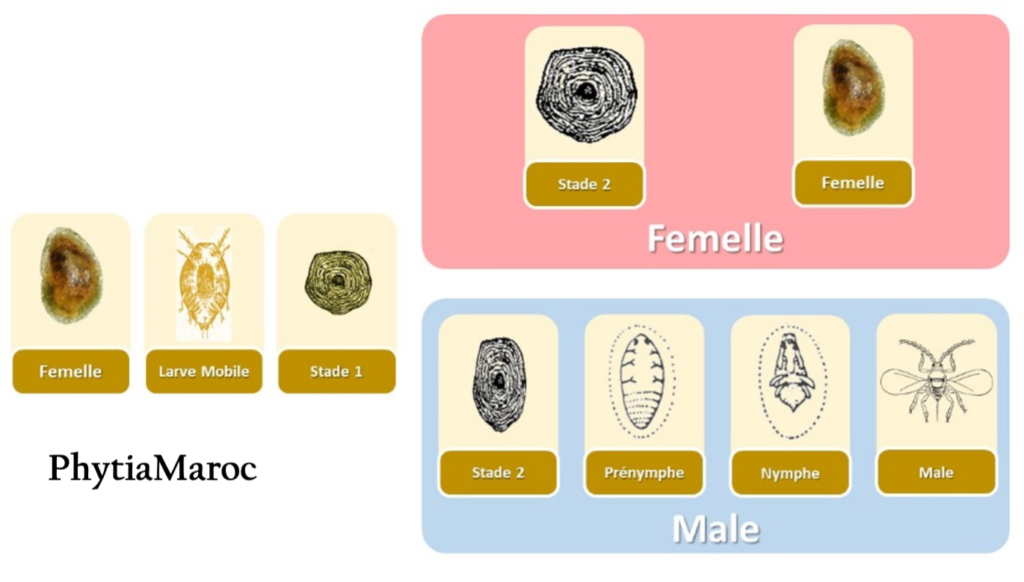
Larvae : Young larvae (called “crawlers”) move to find a feeding site. They go through 3 larval stages before becoming adults.
-
Reproduction : largely parthenogenetic (without mating).
-
Cycle length : several months; 1 to 2 generations per year depending on climatic conditions.
-
Survival : Adult females overwinter on twigs and continue to feed in mild winters.
-
-
-
Symptoms
-
-
-
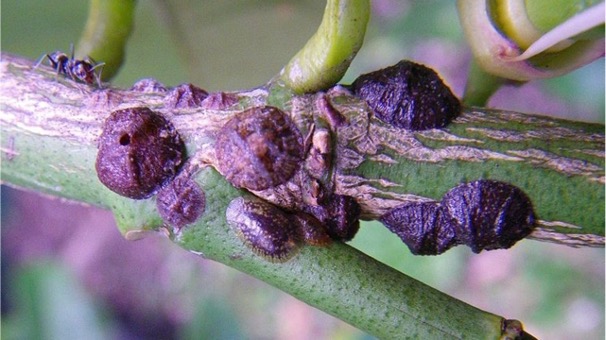
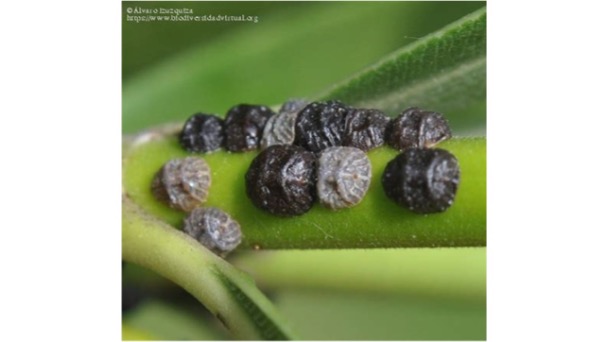
Presence of bulging and dark brown mealybugs on twigs and leaves.
-
Weakening of the plant by sucking the sap.
-
Production of abundant honeydew → development of black sooty mold on leaves and fruit.
-
Decrease in photosynthesis, slowed growth, leaf drop.
-
Depreciation of fruit : fouling, blackening, loss of commercial quality.
Contributing factors
-
-
-
-
-
-
Mild and humid eco-climatic conditions, especially in coastal areas.
-
Lack of natural control (predators or parasitoids destroyed by insecticides).
-
Unaerated orchard, dense or poorly maintained plantings.
-
Presence of ants that protect mealybugs from their natural enemies in exchange for honeydew.
-
-
-
-
Control Method
Preventive control
- Regular monitoring of young mobile stages (larvae) in spring and summer.
- Pruning of infested parts and removal of plant debris.
- Avoid systematic insecticide treatments that destroy beneficial insects.
Biological control
-
Encouragement of natural enemies:
- Lady Beetles (e.g., Chilocorus bipustulatus)
- Parasitoid Hymenoptera
- Reduction of ant populations, which interfere with the action of beneficial insects.
Chemical control
- Treatment at the young larval stage with suitable products (mineral oils, specific insecticides).
- Application of white oils during winter dormancy to suffocate adults.


